
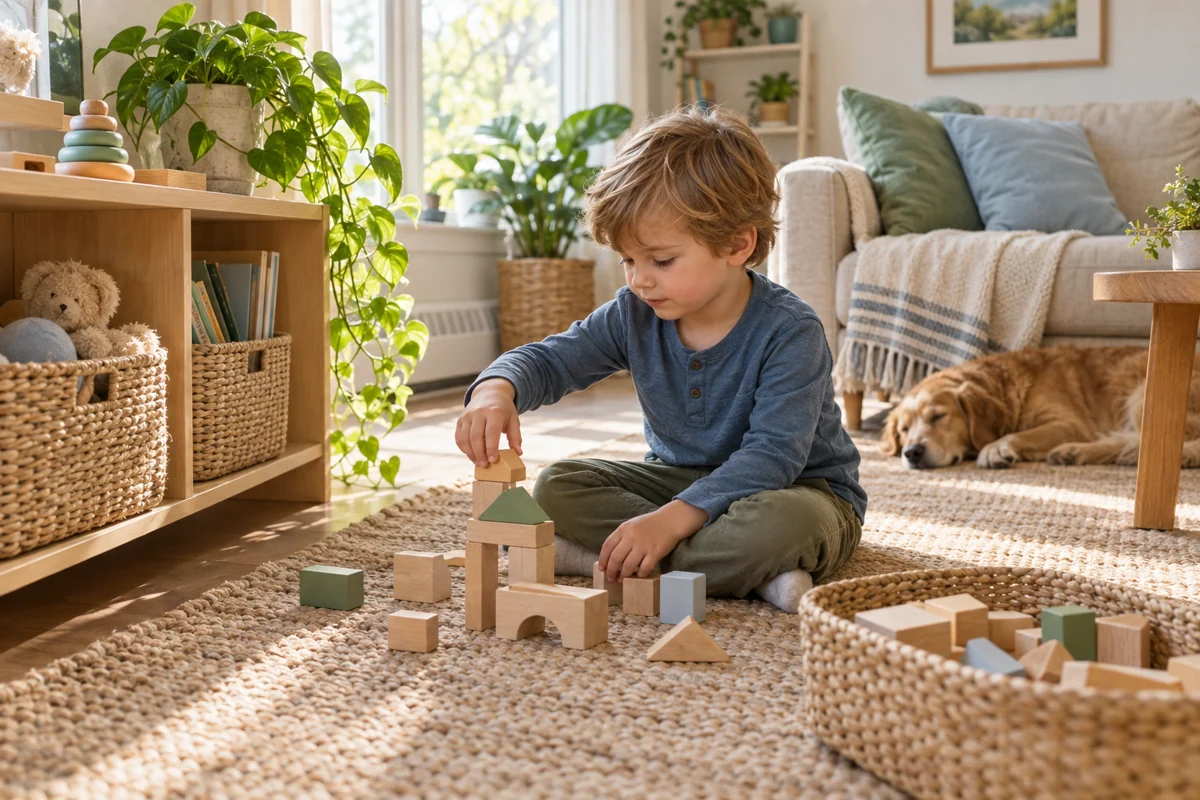
Begin by watching, rather than sorting
For a few ordinary days, notice what comes out and what gets put aside. A book that is read repeatedly may deserve to stay exactly where it is. A building set that spreads across the floor might simply need a clearer storage home. A toy that has been ignored could be awkward to reach, missing a piece or just not interesting at the moment. None of those observations requires an immediate purchase.
Choose a small starting area
Work with one shelf or one basket, rather than reorganising the whole room. Check the contents against their instructions and remove anything broken or unsuitable for the child using the space. Keep sets together so that an activity is ready when it is chosen. If you store part of a set separately, make sure the available pieces can still be used as intended. A manageable first step makes it easier to see whether the change helps.
Leave familiar favourites available
A rotation does not need to take away everything familiar. Keep the activities your child returns to and choose just a few other things to rest. You can use a cupboard or a labelled container already in your home. Store items safely and keep adult materials and unsuitable small parts out of reach. The stored selection should be easy for an adult to find later, without creating a second cluttered corner.
Bring something back when there is a reason
There is no requirement to change the shelf every week. You might bring an item back when someone asks for it, when another activity is ready for a break, or when you want to make room for a different kind of play. A useful question is: will this make starting or putting away easier? If the current arrangement works, it can stay. Repeating a familiar activity is a valid way to spend an afternoon.
Make the return easy
When you reintroduce something, give it a clear place and make sure the necessary pieces are together. You can mention that it is available without setting up a lesson or expecting a particular response. If it is not chosen, leave room for another preference. Your notes might be as small as a sentence about what was used or what was awkward to tidy. They are practical observations, not scores or developmental assessments.
Keep the system lighter than the problem
If the rotation starts to need elaborate tracking or creates more work than it saves, simplify it. One basket out and one basket stored may be enough. You might also decide that open shelves or a few permanent favourites suit your household better. The useful system is the one that fits the people and space you actually have. Our small play corner guide can help you choose the area first, and the Little Play Planner includes a page for optional rotation notes.