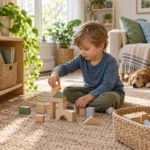
A weekend plan can begin with one pleasant possibility: a walk to a familiar place, a little making time or a game after lunch. It does not need to fill every open hour. If your week has already involved plenty of organising, a smaller plan may be easier to carry into the days ahead. Choose something that fits the people, time and energy you have, then leave room for ordinary meals, pauses and the unexpected things that make family life feel like itself.
Start with what is already fixed
Notice any appointments, work, travel or household jobs that need to happen. Put those in your plan before choosing an extra activity, so a supposedly relaxed outing does not end up squeezed between two deadlines. You do not need a detailed timetable. A few simple notes about the morning or afternoon can make the available space clearer. Include travel and preparation where relevant; an hour at a park may involve more than an hour away from everything else.
Choose an activity with an easy beginning
A familiar place or a simple setup can reduce the number of decisions needed on the day. You might revisit a nearby outdoor space, bring out a known game or make something from materials already at home. Choose one starting point rather than several options that all need preparation. If your child can contribute a preference, offer a manageable choice. The plan should be something you can realistically support, not an activity that looks good on paper but needs more energy than you have.
Write down the smallest useful preparation
Ask what would make beginning easier. Perhaps the game needs its pieces checked, the drawing materials need gathering or the outing needs a bag packed with ordinary essentials. Keep the preparation list short and specific. If it grows into a shopping trip and several evening jobs, reconsider the activity’s scale. You can simplify the idea or choose another one. Planning is useful when it makes the day easier to enter, not when preparing becomes a larger project than the thing you hoped to enjoy.
Make a gentle alternative for changed plans
Weather, tiredness or another practical change may make the original idea awkward. Choose one alternative that uses little extra preparation, such as a familiar indoor activity or a shorter version of the outing. You do not need to create an equally impressive replacement. Explain the change in simple terms and acknowledge any disappointment. The aim is to have somewhere to turn, while leaving room to decide that a quiet ordinary day is the more useful option.
Leave space around the activity
Avoid treating the rest of the day as empty space that needs filling. A meal may take longer, a child may want to linger or everyone may need a pause afterwards. Keeping some time unassigned allows the chosen activity to finish without immediately racing toward the next one. You can still enjoy spontaneous ideas if they fit. The difference is that you are not depending on a chain of activities all working exactly as planned for the weekend to feel worthwhile.
Remember one thing that worked
At the end of the weekend, you might jot down a small detail: a place you would return to, a game that was easy to start or a preparation step that was unnecessary. There is no need to rate the whole weekend or keep a complete record. One useful note can make the next plan lighter. If the planned activity never happened, you can still notice what the family enjoyed. The value of the time was not limited to the item you wrote down beforehand.