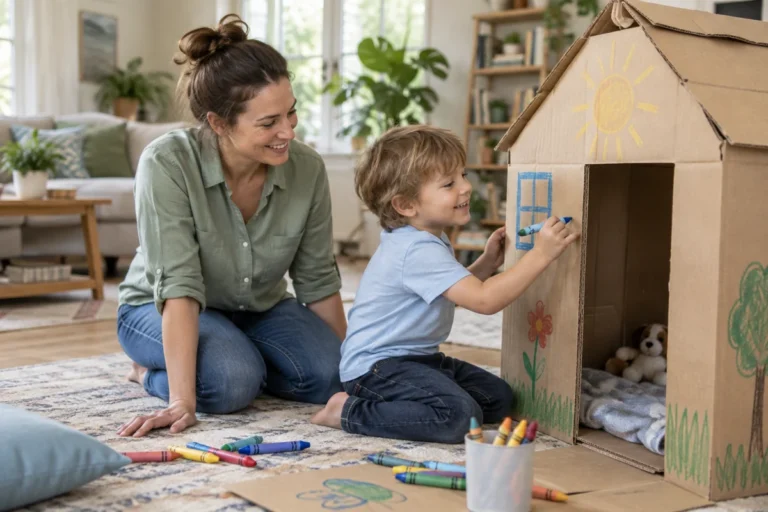
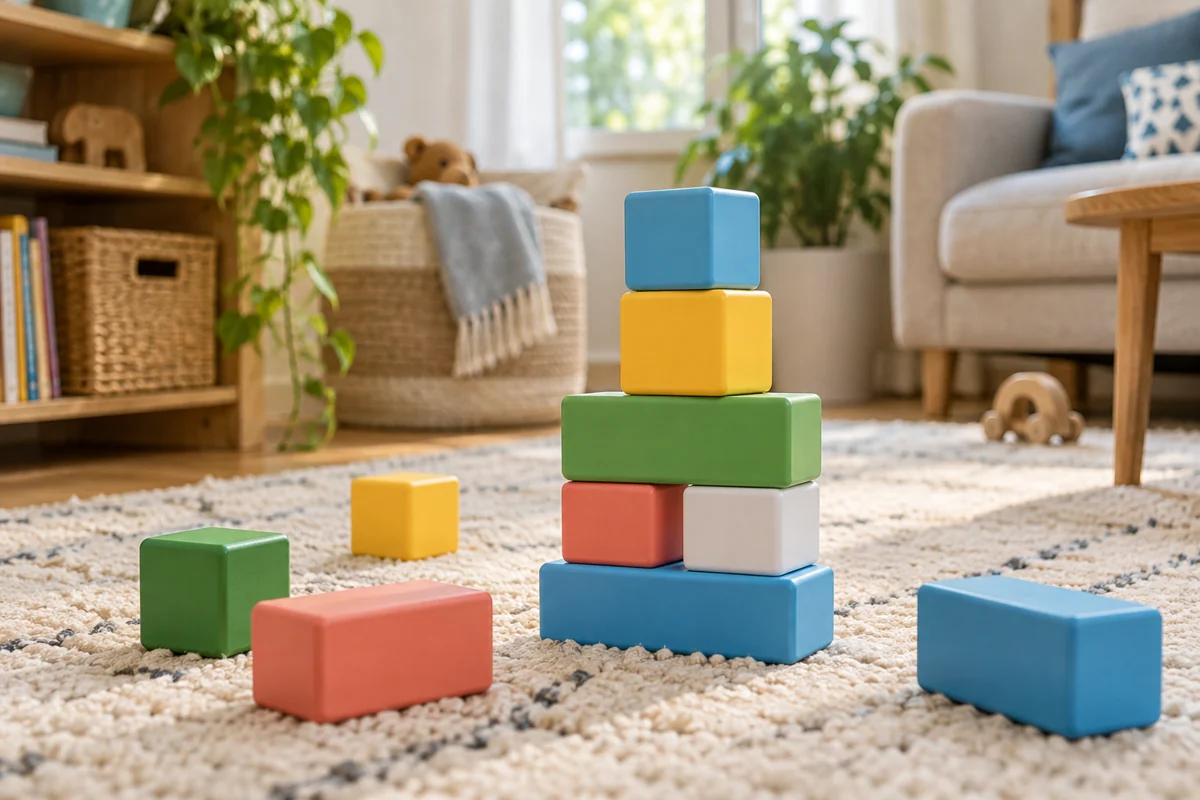

A whole tub of building pieces can look like endless possibility and feel like a lot to begin with. A handful on a clear patch of floor offers a smaller invitation: a short line, two pieces joined or a little wall with nowhere particular to go yet. Choose appropriate materials and follow their instructions, then see what your child wants to try. The collection does not have to become a tall tower or a recognisable model for the session to be worthwhile. Sometimes the interesting part is joining and taking apart.
Choose pieces that can be used together
Start with a compatible, age-appropriate selection from a set you know. Check the pieces and remove anything damaged or unsuitable according to the manufacturer’s guidance. Do not assume different brands or ranges connect safely just because they look similar. Offer enough for a workable start and keep the rest in their container nearby. A smaller selection is useful only if it still allows the materials to be used as intended. You can add more when there is a clear reason.
Give the building a comfortable place to happen
Choose a stable, suitable surface with room around it for the people playing. Keep the setup out of a busy walkway and think about when the area will be needed for something else. You do not need a permanent building station. A modest clear space can work for a short session, provided there is a sensible place for pieces and unfinished work afterwards. Let your child know if the whole arrangement will need to be cleared before another household activity.
Make one small start, if a start is wanted
If your child is unsure what to do, you might join two pieces or place a short row and wonder what it could become. Leave the answer open. The row may become a train, a fence or nothing named at all. If your child already has an idea, follow their lead instead of offering a more elaborate adult version. Building alongside someone can be enjoyable without supplying a model to copy or improving every unstable-looking arrangement that is safe to explore.
Add pieces in response to an idea
When your child wants a longer road or a different shape, look together at whether another suitable piece would help. This gives the larger collection a reason to appear, rather than spreading everything out automatically. You can also ask whether an existing piece could be moved or reused. Keep the exchange playful rather than turning it into a problem-solving test. If the interest changes from building to sorting or pretend play, decide whether the materials can support that direction appropriately.
Leave room for a wobble or a change of plan
Something may fall, fail to join or turn out differently from the picture in your child’s mind. Be nearby to help and acknowledge frustration without rushing to rebuild everything yourself. Ask whether they want a hand, another piece or a pause. A building session does not have to deliver a lesson in persistence. You are sharing materials and time, and stopping can be a reasonable choice. Keep the environment suitable while allowing room for ordinary trial, change and small discoveries.
Choose what happens to the creation
At the end, your child may want to keep one part, take a photo or dismantle the whole thing. Offer the options your space can realistically support. Gather the remaining pieces into their usual container so the next invitation is easy to prepare. You might notice that only a small selection was used, which can guide future sessions or purchases. A bigger collection is not always the next step. The same handful can become something different when it is brought out another day.