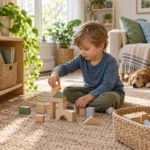
A toy can look beautifully compact in its box and fill half the room once it is being used. Before adding something to the basket, imagine an ordinary afternoon with it: where the pieces spread, where an adult sits and what happens when the room is needed for something else. This is not about having a large or perfectly organised home. It is about choosing a format that works with the space you actually share, so starting and stopping do not become bigger jobs than the play.
Measure the activity, not only the packaging
Look for the dimensions of the item in use and compare them with the available area. A folded tunnel, a boxed game and a stored easel can each need much more room when open. Leave appropriate space around the activity as well as under it, following the product instructions. If the listing gives only package dimensions, treat that as missing information rather than an answer. You may need to check the manufacturer’s details before deciding that the toy will fit.
Think about what travels beyond the main toy
A central board or container may be only the beginning. Cards, figures, tools and unfinished creations can spread around it. Picture where those extra items would sit and whether they make the shared area difficult to use. A large piece count can be appealing, but it does not tell you how many pieces need to be out at once. A smaller starting selection may work, provided the activity can still be used appropriately and the remaining parts have a clear home.
Choose the storage place before the purchase
Ask where the whole set will go between sessions. A supplied bag may help, but check whether it closes, what it holds and how it fits on your shelf. Built-in storage can be useful without making cleanup automatic. You still need time to gather the pieces and follow any cleaning or drying instructions. If the only possible storage place is difficult for an adult to reach or blocks something used every day, the toy may become harder to bring out than expected.
Include the adults and the rest of the household
Some activities need an adult beside the child, room for another player or access to water and power. Consider those needs as part of the footprint. A dining table might be a good place for a short game but unavailable when dinner preparation begins. A rolling activity may need a route that another person uses to move through the room. There is no universally correct setup. The useful choice respects the people and routines already using the space.
Compare formats that solve the same real need
If the aim is a little making time at the table, compare a compact reusable activity with paper materials before assuming a large kit is necessary. If the interest is building, look at the type of pieces and the likely spread, not only the size of the storage tub. Try to describe the need in one sentence. That makes it easier to compare products that actually serve the same purpose, instead of choosing whichever listing offers the most accessories.
Leave room to decide against buying
Sometimes this small check reveals that a toy is a good fit. Sometimes it shows that a familiar item, a rearranged shelf or a borrowed game would do the job just as well. You can keep the product on a list and return when there is a clearer place for it. A purchase does not become more useful because you make room by adding several storage products. Choosing less can simply be a practical decision about the afternoon you want to have.